



Investigation of the material removal mechanism in chemical mechanical polishing of YAG crystals using acidic polishing slurry
-
摘要: 针对高功率激光器件对增益介质表面质量的严苛要求,本文以钇铝石榴石(YAG)晶体为对象,开展酸性化学机械抛光(CMP)工艺优化与机理研究。YAG晶体因高硬度与低断裂韧性,传统方法难以兼顾高材料去除率(MRR)与超低表面粗糙度(Sa),制约了其在高端激光系统中的应用。通过正交实验设计,系统考察压力、转速与抛光液浓度对抛光响应的主效应与交互作用,揭示了MRR与Sa主导因素分异规律:MRR受压力主控,Sa由抛光液浓度主控。基于该规律提出“去除-质量双响应参数解耦匹配准则”,并成功寻获协同最优工艺窗口(A3B2C2:110 kPa,4 r/min,体积分数10%),实现MRR达30 nm/min,Sa低至0.14 nm,PV值0.04λ,表面零缺陷。MRR较现有$ {\text{SiO}}_{2} $磨料工艺提升11%,Sa低于Nd:YAG应用阈值(≤0.2 nm)。机理研究表明,酸性CMP中H+优先攻击$ \text{Al-O-Al} $键,诱导表层$ [{\text{AlO}}_{4}] $/$ [{\text{AlO}}_{6}] $单元重构与晶格畸变,XRD峰展宽与XPS中Al 2p结合能正移(73.46 eV→75.23 eV)共同证实表层发生非晶化转变与$ \text{Al-OH} $水合层生成,形成“质子介导-键选择性断裂-界面成键-软化层剥离”四步去除机制。在此基础上,首次提出“化学-机械时序匹配度”(CM-TM)理论框架,将CMP表面质量控制从参数寻优层面提升至反应动力学与力学去除的协同调控层面。本研究为YAG及同类硬脆光学材料的子尺度无损加工提供了系统的工艺准则与机理解释,兼具理论价值与工程指导意义。Abstract:
Background Yttrium aluminum garnet (YAG) crystals, used as gain media in high-power laser devices, require stringent surface quality. However, their high hardness and low fracture toughness make it difficult for conventional polishing methods to simultaneously achieve a high material removal rate (MRR) and ultra-low surface roughness (Sa), which limits their application in advanced laser systems.Purpose This study aims to investigate the process optimization and underlying mechanisms of acidic chemical mechanical polishing (CMP) for YAG crystals.Methods An orthogonal experimental design was employed to systematically evaluate the main effects and interactions of pressure, rotational speed, and slurry concentration on polishing responses.Results The results revealed that MRR is predominantly controlled by pressure, while Sa is primarily determined by slurry concentration. Based on this finding, a "decoupling matching criterion for removal-quality dual-response parameters" was proposed, leading to the identification of an optimal synergistic process window (A3B2C2: 110 kPa, 4 r/min, volume fraction 10%). This optimized process achieved an MRR of 30 nm/min, an Sa as low as 0.14 nm, a PV value of 0.04λ, and a defect-free surface. The MRR represents an 11% improvement over existing SiO2 abrasive processes, and the Sa value is below the application threshold for Nd:YAG (≤0.2 nm). Mechanistic studies indicated that in an acidic CMP environment, H+ preferentially attacks Al–O–Al bonds, inducing surface reconstruction and lattice distortion. The broadening of XRD peaks and the positive shift of the Al 2p binding energy in XPS (from 73.46 eV to 75.23 eV) confirmed surface amorphization and the formation of a hydrated Al–OH layer.Conclusions These findings establish a four-step removal mechanism: proton-mediated action, selective bond cleavage, interfacial bonding, and softened layer stripping. Furthermore, a theoretical framework termed “Chemical–Mechanical Temporal Matching” (CM-TM) is proposed for the first time, elevating CMP surface quality control from parameter optimization to the synergistic regulation of reaction kinetics and mechanical removal. This study provides a systematic process guideline and mechanistic explanation for atomic-scale, damage-free polishing of YAG and similar hard and brittle optical materials, offering both theoretical value and engineering guidance. -
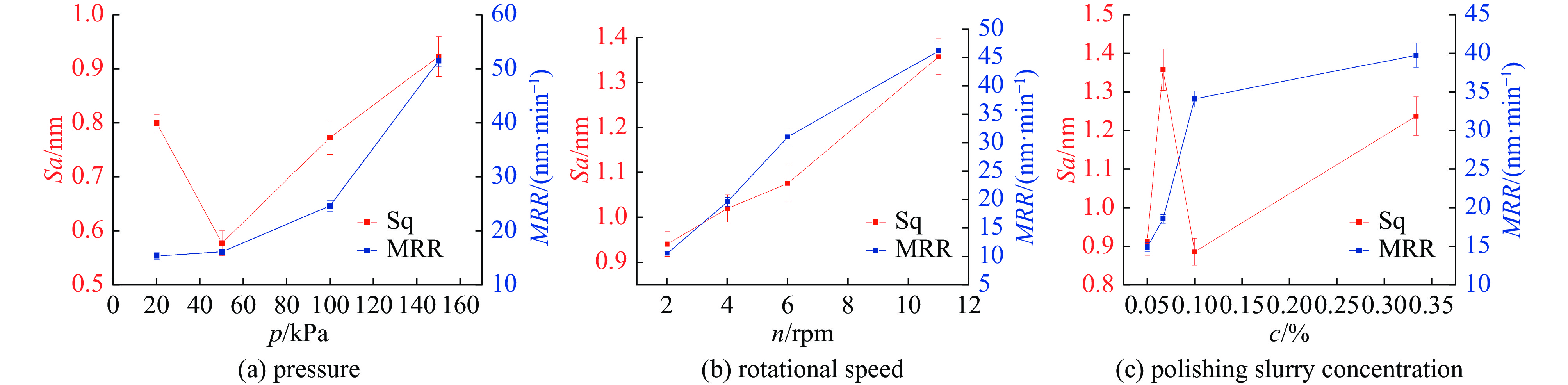
图 1 不同压力、转速、抛光液浓度下的去除率和粗糙度
Figure 1. MRR and surface roughness (Sa) as functions of pressure, rotational speed, and polishing slurry concentration
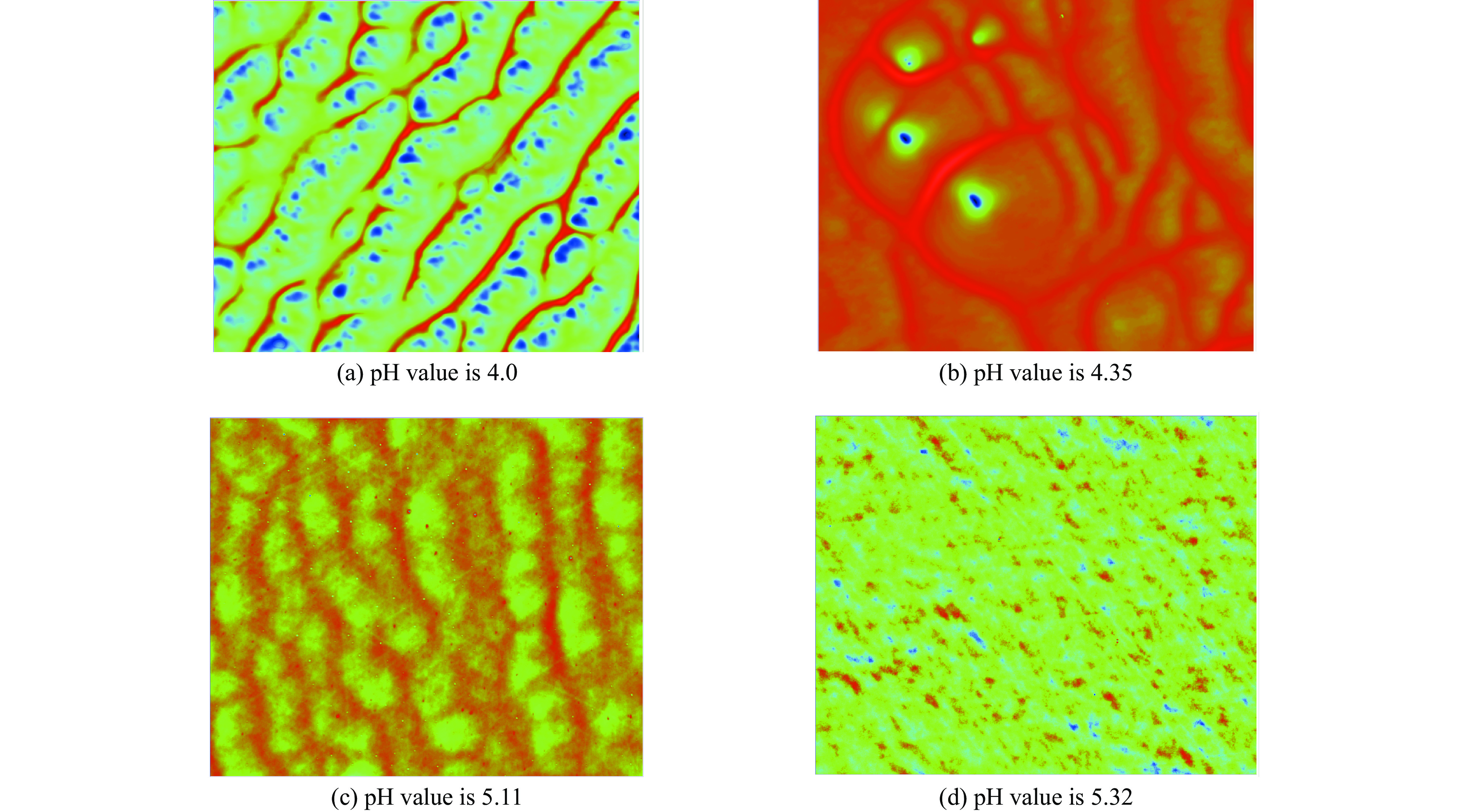
图 2 YAG晶体分别在抛光液中浸泡4 h后的表面粗糙度(Sa)
Figure 2. Surface roughness (Sa) of YAG crystals after 4 h immersion in slurry
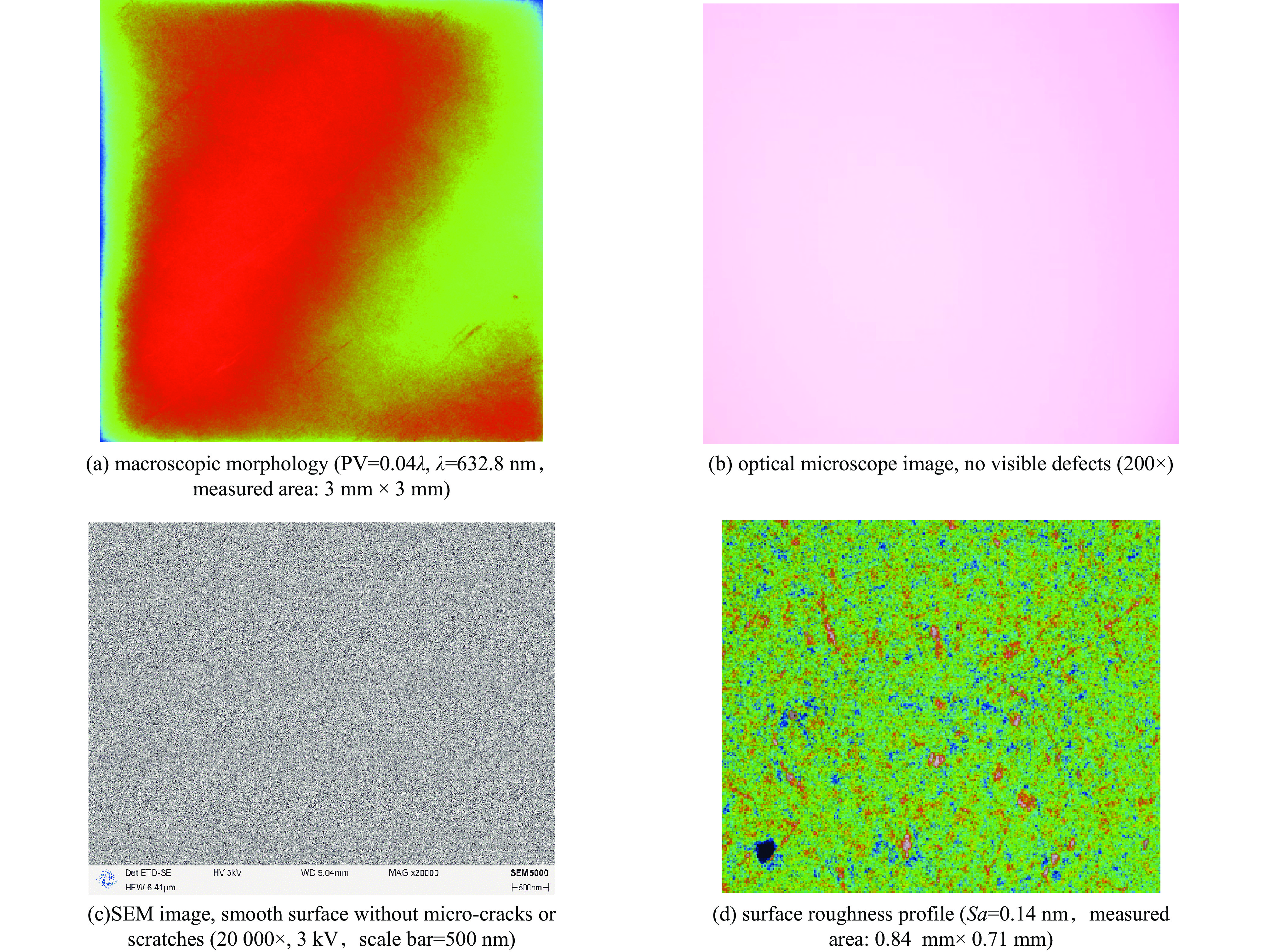
图 3 A3B2C2抛光工艺下YAG晶体的表面质量
Figure 3. Surface quality of YAG crystal under A3B2C2 polishing process
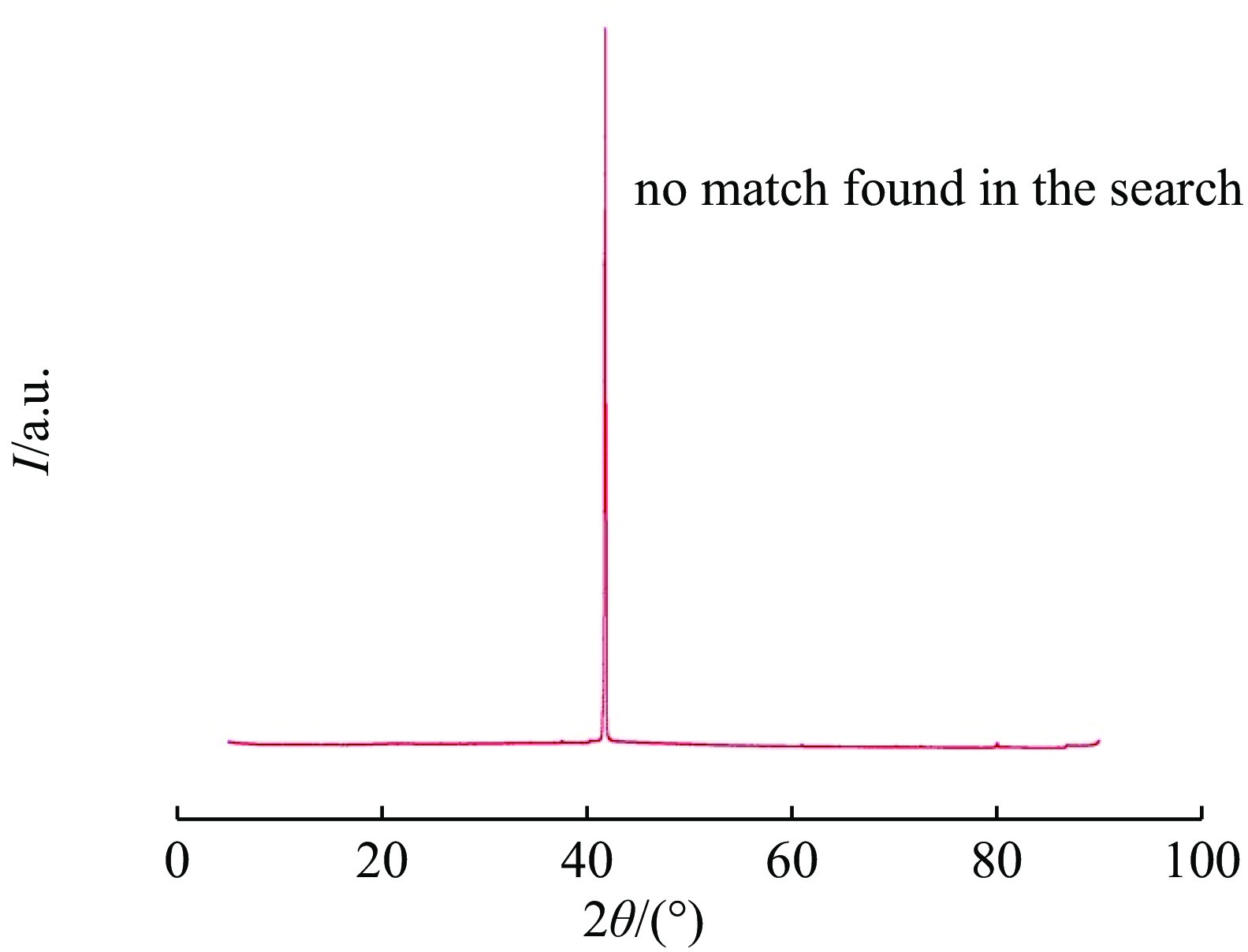
图 5 YAG晶体加工后XRD材料匹配情况(红色圈中结论为未找到匹配材料NO match Found in the search)
Figure 5. XRD material matching after YAG crystal processing (conclusion in red circle is NO match found in the search)
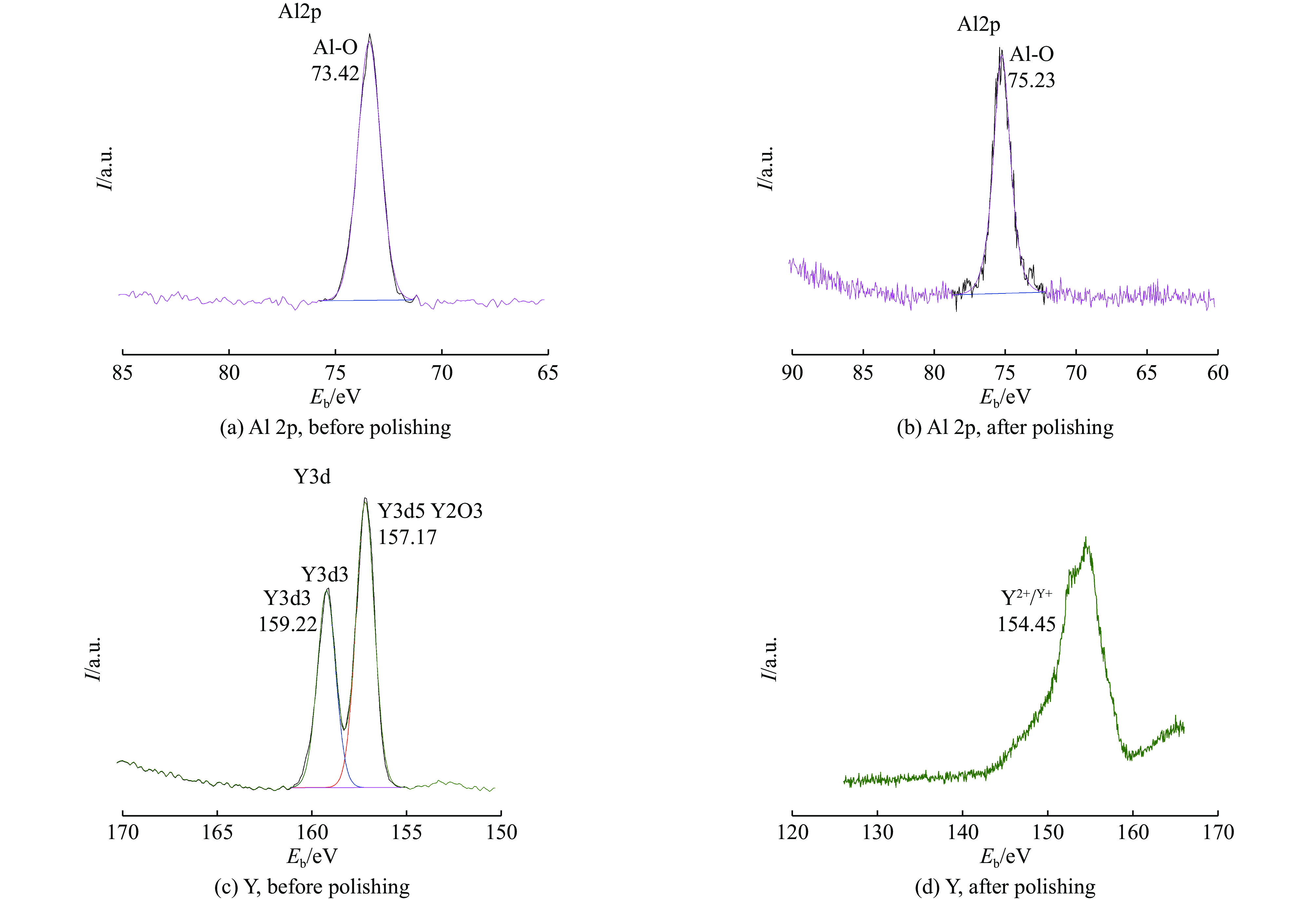
图 6 YAG晶体加工处理前后的XPS图像
Figure 6. XPS spectra of YAG crystal before and after processing
表 1 工艺参数和正交水平
Table 1. Factors and levels used in the orthogonal experimental design
level pressure/kPa(±5%) rotation speed/(r/min) polishing slurry concentration (slurry: $ {\text{H}}_{2}\text{O} $, vol%) 1 22 2 1:3 2 55 4 1:10 3 110 6 1:15 4 160 11 1:20  下载: 导出CSV
表 2 抛光液浓度与pH值的对应关系
Table 2. Correspondence between polishing slurry concentration and pH
serial number polishing slurry concentration (vol%, slurry:$ {\text{H}}_{2}\text{O} $) pH value 1 1:3 4 2 1:10 4.35 3 1:15 5.11 4 1:20 5.32
下载: 导出CSV
表 3 工艺参数正交实验结果的平均值和范围
Table 3. Average and Range of Orthogonal Experiment Results for Process Parameters
index pressure A
(MRR)rotation speed B
(MRR)concentration of polishing
slurry C (MRR)pressure A
(Sa)rotation speed B
(Sa)concentration of polishing
slurry C (Sa)K(1,j) 15.30 10.57 39.80 0.80 0.94 1.24 K(2,j) 16.10 19.63 34.10 0.58 1.02 0.89 K(3,j) 24.53 31.03 18.57 0.77 1.08 1.36 K(4,j) 51.50 46.20 14.93 0.92 1.36 0.91 ΔRj (MRR)/(nm /min) 36.20 35.63 24.87 ΔRj (Sa) /nm 0.35 0.42 0.47
下载: 导出CSV
表 4 YAG晶体加工前的XRD参数表
Table 4. XRD parameter table of YAG crystal before processing
# 2θ/(°) d I(f) (hkl) θ/(°) 1/(2d) 2pi/d 1 20.934 4.2400 6.0 (001) 10.467 0.1179 1.4819 2 24.032 3.7000 45.0 (101) 12.016 0.1351 1.6982 3 24.164 3.6800 40.0 12.082 0.1359 1.7074 4 26.506 3.3600 25.0 (210) 13.253 0.1488 1.8700 5 26.831 3.3200 20.0 (111) 13.416 0.1506 1.8925 6 30.916 2.8900 4.0 15.458 0.1730 2.1741 7 33.536 2.6700 40.0 (220) 16.768 0.1873 2.3533 8 34.195 2.6200 100.0 (211) 17.098 0.1908 2.3982 9 34.604 2.5900 30.0 17.302 0.1931 2.4259 10 35.743 2.5100 25.0 (300) 17.872 0.1992 2.5033 11 39.855 2.2600 4.0 (221) 19.928 0.2212 2.7802 12 40.605 2.2200 16.0 20.302 0.2252 2.8303 13 41.784 2.1600 25.0 (301) 20.892 0.2315 2.9089 14 42.611 2.1200 20.0 (002) 21.305 0.2358 2.9638 15 44.141 2.0500 16.0 (102) 22.070 0.2439 3.0650 16 45.401 1.9960 4.0 22.700 0.2505 3.1479 17 45.985 1.9720 4.0 (112) 22.992 0.2535 3.1862 18 48.957 1.8590 40.0 (321) 24.479 0.2690 2.3799 19 49.353 1.8450 30.0 (202) 24.677 0.2710 3.4055
下载: 导出CSV
表 5 YAG晶体加工后的XRD参数表
Table 5. XRD parameter table of YAG crystal after processing
# 2θ/(°) d BG height 1% area 1% FWHM 1 35.212 2.5466 1352 160 0.1 6206 0.3 0.432 2 35.656 2.5160 1360 163 0.1 5446 0.2 0.372 3 37.385 2.4034 1407 590 0.3 9504 0.4 0.179 4 38.289 2.3488 1439 162 0.1 13474 0.6 0.926 5 40.175 2.2428 1509 559 0.3 25081 1.1 0.500 6 41.551 2.1716 1552 172797 100.0 2292149 100.0 0.148 7 42.768 2.1126 1572 395 0.2 24392 1.1 0.688 8 43.319 2.0870 1574 281 0.2 18365 0.8 0.728 9 43.830 2.0638 1570 257 0.1 16345 0.7 0.708 10 44.524 2.0332 1555 226 0.1 13375 0.6 0.659 11 45.573 1.9889 1509 172 0.1 13951 0.6 0.903 12 47.735 1.9037 1321 155 0.1 6704 0.3 0.482 13 48.114 1.8896 1287 138 0.1 9365 0.4 0.756 14 48.625 1.8709 1247 159 0.1 9975 0.4 0.699
下载: 导出CSV
-
[1] 刘政邑, 叶先林, 张淞, 等. 2.94 μm室温连续Er: YAG激光器的研制[J]. 强激光与粒子束, 2023, 35: 071007 doi: 10.11884/HPLPB202335.220391Liu Zhengyi, Ye Xianlin, Zhang Song, et al. Development of 2.94 μm room temperature CW Er: YAG laser technology[J]. High Power Laser and Particle Beams, 2023, 35: 071007 doi: 10.11884/HPLPB202335.220391 [2] Chen Wei, Cao Dunhua, Dong Yongjun, et al. Enhancing luminous flux and color rendering of laser-excited YAG: Ce3+ single crystal phosphor plate via surface roughening and low-temperature sintering a CaAlSiN3: Eu2+ phosphor-in-borate glass[J]. Journal of Luminescence, 2022, 251: 119225. doi: 10.1016/j.jlumin.2022.119225 [3] Hostaša J, Nečina V, Uhlířová T, et al. Effect of rare earth ions doping on the thermal properties of YAG transparent ceramics[J]. Journal of the European Ceramic Society, 2019, 39(1): 53-58. doi: 10.1016/j.jeurceramsoc.2018.04.018 [4] Kostić S, Lazarević Z Ž, Radojević V, et al. Study of structural and optical properties of YAG and Nd: YAG single crystals[J]. Materials Research Bulletin, 2015, 63: 80-87. doi: 10.1016/j.materresbull.2014.11.033 [5] Fu Yuelong, Li Jiang, Liu Yang, et al. Influence of surface roughness on laser-induced damage of Nd: YAG transparent ceramics[J]. Ceramics International, 2015, 41(10): 12535-12542. doi: 10.1016/j.ceramint.2015.06.036 [6] Ross D, Yamaguchi H. Polishing characteristics of Nd: YAG ceramics with various Nd-dopant concentrations[J]. CIRP Journal of Manufacturing Science and Technology, 2019, 27: 93-101. doi: 10.1016/j.cirpj.2019.05.003 [7] Fang Wei, Gu Jiajie, Tang Zewei, et al. Effect of chemical action on shear thickening polishing of YAG[J]. Ceramics International, 2024, 50(16): 28775-28785. doi: 10.1016/j.ceramint.2024.05.188 [8] McKay J M N. Chemical mechanical polishing and direct bonding of YAG and Y2O3[D]. Los Angeles: University of California, 2016. [9] Lee D, Lee H, Jeong H. Slurry components in metal chemical mechanical planarization (CMP) process: a review[J]. International Journal of Precision Engineering and Manufacturing, 2016, 17(12): 1751-1762. doi: 10.1007/s12541-016-0201-y [10] Mu Qing, Jin Zhuji, Han Xiaolong, et al. Effects of slurry pH on chemical and mechanical actions during chemical mechanical polishing of YAG[J]. Applied Surface Science, 2021, 563: 150359. doi: 10.1016/j.apsusc.2021.150359 [11] Li Jun, Zhu Yong, Chen Chuang Tian. Chemical mechanical polishing of transparent Nd: YAG ceramics[J]. Key Engineering Materials, 2008, 375/376: 278-282. [12] Xu Fan, Wang Weilei, Xu Aoxue, et al. Effect of particle size and pH value of slurry on chemical mechanical polishing of SiO2 film[J]. ECS Journal of Solid State Science and Technology, 2022, 11: 013004. doi: 10.1149/2162-8777/ac495f [13] Xie Ruiqing, Zhao Shijie, Liao Defeng, et al. Surface characteristics of polished YAG laser crystal[J]. Crystal Research and Technology, 2019, 54: 1800274. doi: 10.1002/crat.201800274 [14] Chen Guomei, Ni Zifeng, Xu Laijun, et al. Performance of colloidal silica and ceria based slurries on CMP of Si-face 6H-SiC substrates[J]. Applied Surface Science, 2015, 359: 664-668. doi: 10.1016/j.apsusc.2015.10.158 [15] Park C, Kim H, Cho H, et al. Effect of relative surface charge of colloidal silica and sapphire on removal rate in chemical mechanical polishing[J]. International Journal of Precision Engineering and Manufacturing-Green Technology, 2019, 6: 339-347. doi: 10.1007/s40684-019-00020-9 [16] Yan Weixia, Zhang Zefang, Guo Xiaohui, et al. The effect of pH on sapphire chemical mechanical polishing[J]. ECS Journal of Solid State Science and Technology, 2015, 4(3): P108-P111. doi: 10.1149/2.0241503jss [17] Toh D, Kayao K, Yamauchi K, et al. Fabrication of YAG ceramics surface without damage and grain boundary steps using catalyzed chemical wet etching[J]. CIRP Journal of Manufacturing Science and Technology, 2023, 47: 1-6. doi: 10.1016/j.cirpj.2023.09.001 [18] De Vido M, Walsh M J, Kirkpatrick S, et al. Impact of gas cluster ion and accelerated neutral atom beam surface treatments on the laser-induced damage threshold of ceramic Yb: YAG[J]. Optical Materials Express, 2017, 7(9): 3303-3311. doi: 10.1364/OME.7.003303 [19] Abdo B M A, Mian S H. Optimization of control variables in rotary ultrasonic machining of alumina ceramic for reduced edge chipping and enhanced surface finish[J]. Journal of the Brazilian Society of Mechanical Sciences and Engineering, 2024, 46: 439. doi: 10.1007/s40430-024-05022-6 [20] Zhu Honglin, Tessaroto L A, Sabia R, et al. Chemical mechanical polishing (CMP) anisotropy in sapphire[J]. Applied Surface Science, 2004, 236(1/4): 120-130. doi: 10.1016/j.apsusc.2004.04.027 -


 点击查看大图
计量
- 文章访问数: 48
- HTML全文浏览量: 31
- PDF下载量: 2
- 被引次数: 0
